
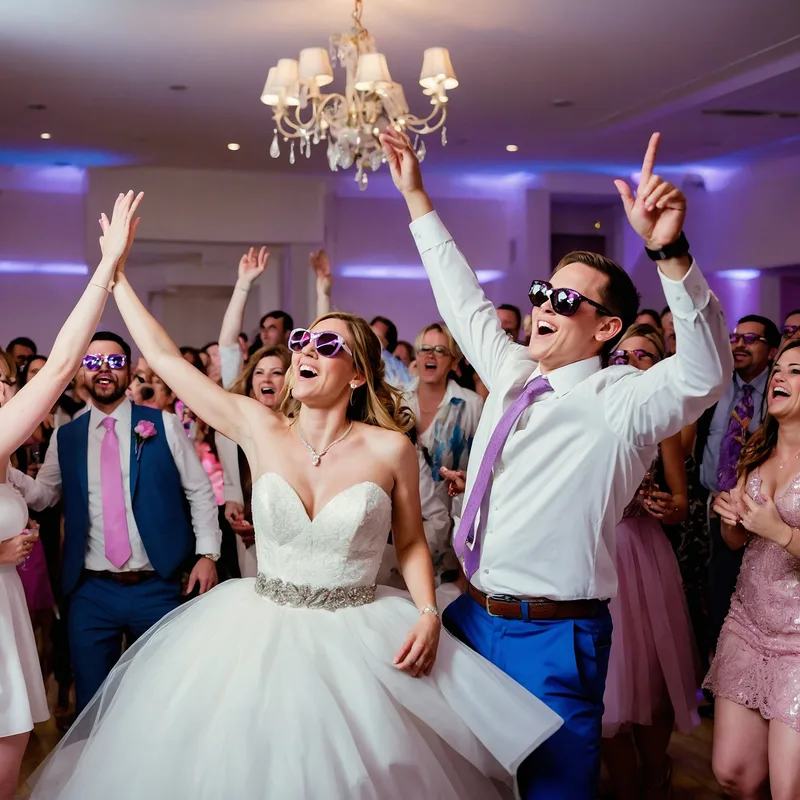
You don't need a first dance. Your options are a traditional slow dance, a choreographed routine, inviting everyone up from the first beat, a last dance instead, a private dance, or skipping it entirely. After more than 2,500 weddings, I've seen every version work, as long as it's the right choice for you.
Do you really need a first dance?
No, and it doesn't have to be what most people picture: two people swaying nervously in the middle of a circle while 150 guests film on their phones. It's the version that makes spotlight-shy couples break into a cold sweat.
But after 2,500+ weddings, I can tell you this: the first dance comes in dozens of forms. Some couples slow dance. Some break into a choreographed routine. Some invite everyone up from the very first beat. And some skip it entirely, heading straight into the party.
Every one of those approaches works. The only version that doesn't is the one where you force yourselves into something that feels wrong.
This guide covers all your options, so you can pick the one that actually fits. Got specific first dance questions? The first dance FAQ covers the most common ones.
What happens in a traditional first dance?
The traditional first dance is the classic version. You're announced, a song plays, and you dance together for two or three minutes while your guests watch and (hopefully) get a little emotional.
It sounds simple because it is. And for a lot of couples, it's genuinely lovely. A quiet moment in the middle of a busy day where you're focused on each other.
A few things worth knowing:
Choosing the song. Pick something you both love, not just "your song" by default. If your song is seven minutes long or has a tempo that's impossible to dance to, it's fine to choose something else. The track should feel like you as a couple. Listen to the lyrics all the way through, too. Some songs that sound romantic have surprisingly dark verses.
Length matters. Two to three minutes is the sweet spot. Anything longer and the energy in the room starts to dip. Most DJs (myself included) will fade the track at the right moment or crossfade into something that invites guests to join. You don't need to dance to the entire song.
You don't need lessons. A simple slow dance, arms around each other, gently moving to the music, is all you need. Nobody is judging your footwork. They're watching two people they care about share a moment.
The choreographed first dance
You've seen the viral videos. Couple starts with a gentle sway, then the music cuts to something upbeat and they launch into a full routine. When it's done well, it's an incredible crowd moment.
It works brilliantly when both of you are genuinely up for it, you've had proper time to rehearse, and you've found a good choreographer who understands weddings (not just dance).
It backfires when one partner has been talked into it, when rehearsals get squeezed into the final fortnight, or when the routine is too ambitious. I've seen couples freeze mid-routine, and the recovery is harder than you'd think.
If you're considering it:
- Start rehearsals at least eight weeks out
- Keep the routine under three minutes
- Build in a "safe" slow section you can default to if nerves hit
- The classic format is 30 seconds slow, then a surprise switch to something upbeat
- Search for wedding choreographers in your area; many offer packages of four to six sessions
A choreographed first dance takes commitment from both of you. If you're both excited about it, go for it. If one of you is dreading it, read on.
What are the alternatives to a first dance?
Not every couple wants to dance alone in the spotlight, and that's completely fine. Here are approaches I've seen work beautifully.
Group dance from the first beat. Instead of dancing alone, you take the floor and I immediately invite everyone to join you. Within seconds, you're surrounded by the people you love. You still get the moment, but the pressure disappears. This is the most popular alternative I see, and guests love it.
Song dedication without dancing. You choose a song that means something to you both. I play it, you have a quiet moment together (at your table, at the bar, wherever you like), and the music speaks for itself. No spotlight, no dancing, just your song filling the room.
Last dance instead of first dance. Flip the tradition. Instead of opening the evening with your dance, close the night with it. By then, you've relaxed, you've had a few drinks, and the pressure is gone. Some couples find this far more intimate than a first dance at the start of the evening when nerves are still high.
Parent dances as the opening moment. If you'd rather share the spotlight, open with a parent dance, or a combined dance where both sets of parents join you on the floor. It shifts the focus and makes for a really warm, inclusive start to the evening.
Can you skip the first dance entirely?
Yes, and I tell couples this all the time: you don't have to have a first dance. It's not compulsory. There's no rule. Nobody will walk out.
In practice, if you skip the first dance, I'll open the dancefloor with a track that gets people moving. Within ten minutes, nobody will remember there wasn't a formal first dance.
What you do instead is up to you. Some couples open with a toast. Some just say "right, let's party" and the music starts. Some prefer an ice-breaker to get energy into the room. All of these work. The evening doesn't need a slow dance to kick off properly.
If older family members ask about it, a simple "we decided to get straight to the party" is all you need. Most people are secretly relieved they don't have to stand in a circle holding their drinks awkwardly.
How do you choose a first dance song?
Whether you go traditional, choreographed, or anything in between, the song matters. Here's what I've learned from thousands of first dances.
Tempo. Mid-tempo works for most couples. Too slow and it drags; too fast and you'll feel rushed. Think 90 to 110 BPM. Songs like "At Last" by Etta James or "Thinking Out Loud" by Ed Sheeran sit in that comfortable range.
Lyrics. Listen to every verse, not just the chorus. "Every Breath You Take" by The Police sounds romantic until you realise it's about obsessive surveillance. "I Will Always Love You" is a breakup song. Check the words.
Length. Anything under four minutes is ideal. If you love a track that runs to five or six minutes, don't worry. I'll fade it or crossfade into the next song at the right moment. You won't be stranded out there.
Live vs recorded. If you've booked a live musician or band for the evening, they might offer to play your first dance. This can be stunning, but check they know the song well. A poorly executed live version of your favourite track is worse than the original recording played on a great sound system. If in doubt, go recorded.
What if you hate the spotlight?
If the spotlight ties your stomach in knots, you're far from alone. I work with spotlight-shy couples regularly, and there are practical ways to make the first dance comfortable.
The 30-second version. You dance alone for about 30 seconds (just long enough for photos), then I invite everyone to join you. The song keeps playing, but now you're surrounded by friends and family. The pressure lifts instantly.
Lights down. I can keep the lighting low and warm during your dance, rather than putting a spotlight on you. It changes the entire feel. You're still dancing, but you don't feel like you're on stage.
Private first dance. Some couples have their first dance before guests arrive for the evening, or during a quiet moment in the day. Your photographer captures it, you get the moment to yourselves, and nobody else knows it happened. Couples who choose this often say it was one of their favourite parts of the day.
Dance among your guests. Instead of clearing the floor, keep everyone on it. Start the party music and then have your dance in the middle of the crowd. It's informal, relaxed, and takes the performance element away completely.
What does your DJ do during the first dance?
Whatever you decide, a good wedding DJ will make the transition smooth. Here's what I do, regardless of which approach you choose.
The announcement. I match the tone to you. If you want low-key, I'll keep the introduction brief and warm. If you want energy and build-up, I'll create that atmosphere. We'll agree the wording beforehand so there are no surprises.
Lighting. Lighting sets the mood more than most people realise. For a traditional first dance, warm tones and a soft wash. For a party opener, something brighter with movement. For the lights-down approach, just enough ambient glow to keep it intimate while your photographer can still work.
Inviting guests to join. At the right moment (usually 60 to 90 seconds in, or sooner if you've asked), I'll invite guests to join you. The phrasing matters. "If you'd like to join the happy couple on the dancefloor" works far better than "everyone get up." It's an invitation, not a command.
Cutting the song. If your track runs long, I'll crossfade into the next song naturally. You won't hear an abrupt stop, and within a few bars you're into the first party track of the evening.
Your first dance, your rules
There's no right answer here. A tearful slow dance is no more valid than skipping it altogether. A choreographed routine is no better than inviting everyone up from the first note.
What matters is that whatever you do feels like you. Not what your parents expect, not what you've seen on social media, not what a checklist says you should do.
If you're still unsure, tell your DJ. A quick conversation about what you're comfortable with is all it takes. I've helped hundreds of couples with this exact decision, and the answer is always the same: do what makes you feel good.
The dancefloor will fill regardless. I'll make sure of that.