
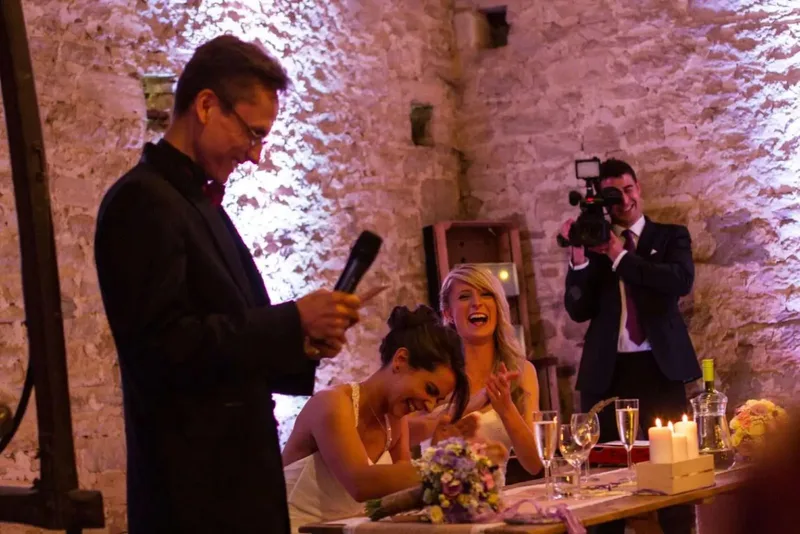
A great wedding speech is prepared early, written by you, five to seven minutes long and delivered sober, with eye contact and a strong closing line you wrote first. Keep it appropriate for Gran, make it about the couple, and speak from the heart. After more than 2,500 weddings, the speeches guests remember came from people who prepared.
The best man who made the bride's mother cry? Not tears of laughter. The groom who spoke for 75 minutes? Half the room had migrated to the bar before he finished. He didn't notice.
These aren't horror stories. They're what happens when people wing it.
I've heard over 7,500 speeches across 2,500+ weddings. The ones guests still mention years later? Rarely from natural public speakers. They're from people who prepared. Who had a system. Who knew the difference between a good story and an appropriate story.
Here are a dozen lessons from more than twenty-five years of watching what works, and what clears a room.
1. Get Ready
Thousands of pounds are spent on weddings: the dress, the food, the venue. All planned meticulously, often months in advance. Yet speeches? Left to the last minute.
The worst speeches I've heard come from people who clearly haven't given any thought to what they're going to say. They think they'll just wing it. Nine times out of ten, this fails.
Work on your speech early. Review it. Refine it. There are good books available on wedding speeches, but don't just Google and copy-paste. If you find a line on Google, at least a few guests will have heard it before. One recognisable line puts doubt in people's minds about whether any of your speech is authentic.
You want it to be your speech. Telling your story is always best. Write it yourself. Not a neighbour, not a friend. It won't have the same emotion if someone else writes it. Most people who deliver underwhelming speeches vastly underestimate the importance of having emotion in it.
2. How Should You Structure a Wedding Speech?
Don't ramble. Start by writing the end of the speech, then work backwards. Even if you have no other notes, have your last sentence written down so you can finish strongly. A great closing line makes all the difference.
If you're looking for content ideas, write about the past, the present, and hopes for the future. Tell interesting stories that don't include risqué behaviour.
You don't have to memorise it word for word. There's nothing wrong with reading from a script, as long as you say it from the heart. If you need notes, small index cards are far preferable to A4 paper.
Always start with something impactful. Don't open by thanking the bridesmaids. You can do that after your engaging opening.
3. How Should You Practise and Visualise Your Speech?
Once you've written your speech and you're happy with it, practise in front of a mirror. Visualise yourself there at the wedding.
Record it on your phone and play it back when you're in the car or walking the dog. How does it sound? Is it monotone?
Find places where you can speak softly for dramatic effect, or pause, or change the inflection in your voice. When you're happy, perform it in front of a family member or friend and get feedback.
4. How Long Should a Wedding Speech Be?
Your speech doesn't have to be long, but longer than "thank you all for coming."
The ideal time for a speech is five to seven minutes.
It's better to have guests saying, "I wish that speech was longer" rather than "OMG, when will he stop talking?"
5. Stay Sober and Appropriate
Many people believe that a few drinks before the speech will calm nerves and improve delivery. This is a fallacy. It usually just loosens inhibitions, resulting in embarrassing stories.
Don't talk about stag night shenanigans, bodily functions, or anything that will offend Auntie Jean or Gran. What's funny to your close friends may turn off some guests, especially older ones.
Keep it Disney-friendly and you'll be on the right track. Humour is good, but only if that's your style. Know your audience and what they'd appreciate.
Also avoid whispering or shouting into the microphone. A tip for the best man: by far the best tactic is complimenting the bride by insisting just how lucky your friend is to have found such a perfect partner.
6. Smile and Make Eye Contact
Smile when you deliver your speech and look up at your audience. Find the friendly faces in the crowd and make eye contact with them. This gives you the confidence you need.
Have pauses. Many speakers go too fast.
Breathe. As you approach the microphone, take a slow, deep breath, aiming to expand your stomach, not your chest. Deep breathing sends oxygen to the lungs and brain and promotes relaxation.
7. What If You Make a Mistake?
Don't worry if you forget your lines or mess up. Smile and say something like: "What I meant to say was..."
The guests are all there for the same reason: the bride and groom. They don't want you to fail. They're on your side. If you show you're human, they'll warm to you.
Give up the belief that you have to be perfect. Give yourself permission to be human.
Look down to read, and always look up to speak. Don't read and speak at the same time, because that's one sure way to lose connection with the audience. And don't speak too fast.
If you need a microphone, try to practise with it first so you know how to turn your head without losing sound. Hold the microphone just below your chin, not pressed against your mouth. Not at your belly button. Not at your chest. Just below your chin.
8. Should You Drink Before Your Speech?
The myth that you're funnier when you've had a drink isn't true.
You don't want to be up there swaying and slurring your words. Alcohol can make you lose your inhibitions and start telling inappropriate stories that offend.
9. It's Not About You
If you're giving a best man's speech, remember: this day is not about you. (The Best Man's Complete Guide covers everything from stag dos to speech structure.)
There's nothing worse than a speech that's self-serving and ends up being "look at me and how cool I am."
Don't use props unless they're relevant to the bride and groom. Using a slideshow of pictures with your speech can be a great idea, but be careful not to turn it into a corporate-style presentation that inflicts death by PowerPoint on unsuspecting guests.
10. Don't Forget the Toast
Don't forget to have a full toasting glass with you to perform the toast. The Master of Ceremonies or duty manager should have sorted this, but it's worth making a note at the top of your speech notes as a reminder to check before you start.
Never say "fill your glasses" during your speech and then immediately follow it with a toast. You've given absolutely no time to fill their glasses, so it was pointless saying it.
11. Mind the Speakers
Do not walk in front of or place the microphone near the PA speakers. If you hear feedback, don't get nervous. Pause, hold the microphone just below your chin, and the problem will subside.
12. Be Sincere
It's unfortunate that the majority of grooms are so nervous that when they say phrases such as "Doesn't the bride look beautiful" or "Thank you to Auntie Carol for making the wedding cake," they're often read out like a shopping list. No sincerity in the voice. Not looking at the person they're speaking of. The same goes for the father of the bride, who often has the most emotional words to deliver.
This usually happens because of nerves, not because they meant to be insincere. But if they'd realised how they sounded to everyone listening, they would have made more effort to deliver with emotion and sincerity.
Aim to speak from the heart and let it flow. Do a mirror check and acknowledge that you look great, because you do. You've done all the hard work.
Remember: it's not just what you say, but how you say it.
Need Help?
If you'd like advice on writing or delivering speeches, get in touch. You'll also find practical answers in the FAQ, and there's a surprising backstory in the history of wedding reception traditions. I've been a public speaking coach for years, and I'm always happy to help nervous speakers become confident ones.
Your speech doesn't have to be perfect. It just has to be you.