
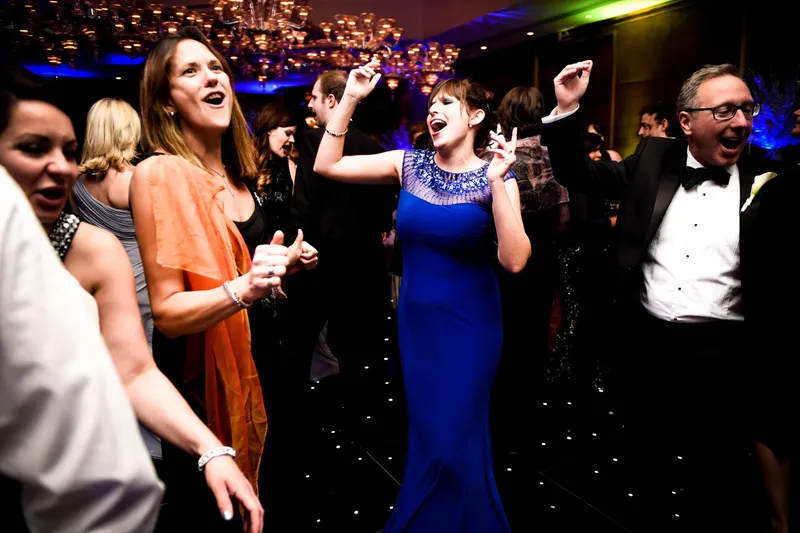
The last 30 minutes matter most because of the peak-end effect: guests remember an evening by its best moment and how it ended, not by averaging every hour. A flat finish can overshadow a brilliant night. After more than 2,500 weddings, I'd rather end on a high, even a little early, than play on to an emptying room.
Have you ever been to a wedding where the evening started brilliantly, the dance floor was packed at 10pm, and then by midnight the room was half-empty and the DJ was playing to a handful of people gathered near the bar?
If so, here's the strange thing: even though the first two hours were fantastic, there's a good chance the lasting impression was "it sort of fizzled out." The great bit gets overshadowed by the flat ending.
That's not a quirk. It's how human memory works, and it has a name: the peak-end effect.
What Is the Peak-End Effect, and Why Does It Matter for Weddings?
The peak-end effect comes from the research of psychologist Daniel Kahneman. In simple terms: when people look back on an experience, they don't average out every moment. They judge it based on two things: the most intense point (the peak) and how it ended.
Everything in between gets compressed. The quiet drink at the bar, the fifteen minutes spent chatting outside, the half hour when the dance floor thinned out while people got food. None of that makes much of an impression in memory.
What sticks is the peak: the song that got everyone jumping, the surprise announcement, the moment the whole room was singing together. And the end: whatever was happening in the final 20 to 30 minutes before people left.
Get those two moments right, and the whole evening is remembered as brilliant. Get the ending wrong, and it doesn't matter how good the rest of it was.
What Does the Peak-End Effect Look Like at Real Weddings?
I've DJed over 2,500 weddings. The peak-end effect plays out at nearly every one, and it's why timing matters so much more than most couples realise.
Scenario one: The booking says midnight, but by 11:15 the energy has clearly peaked. Parents are gathering coats. The over-50s left twenty minutes ago. There's a core of 30 people still going strong, but the room feels emptier than it is. If I play on until midnight, those last 45 minutes will define how people remember the night. Instead, I build to a big finish at 11:30, bring everyone together for one last song, and close on a high. Thirty minutes "early" but a far stronger memory for everyone there.
Scenario two: It's 10pm and the floor is already heaving. The couple booked until 11:30 but nobody is slowing down. This crowd has energy for another two hours. The peak is still building. In this case, finishing at 11:30 might cut the best part short. If the venue allows it, extending by even 30 minutes means the peak and the ending can be the same moment: the absolute high point of the night.
Both scenarios require reading the room in real time, not sticking rigidly to a schedule decided six months ago.
"You can tell Tony knows exactly what he's doing. He arrived with clear ideas about how to structure the day, confident in his music choices, assured in his MC delivery. But his confidence never tipped into arrogance, he was collaborative and open to our input."
-- Isobel & Davide
What Makes Wedding Guests Leave Earlier Than You'd Expect?
When couples plan their evening, they're often thinking about their own stamina and their closest friends. "We always party until 1am, so we'll book until 1am." But your wedding guests aren't your Saturday night crew.
Here's what pulls people out of the room earlier than planned:
- Parents with young children. Babysitters have a curfew. When parents start leaving, the room thins quickly and visibly.
- Afternoon drinking. Guests who've been drinking since 2pm are often done by 10:30. The energy drops faster than you'd think.
- Travel distances. If most of your guests have driven an hour or more to get there, they'll start thinking about the journey home well before midnight.
- The age split. A guest list heavy on over-50s will usually peak earlier than one full of 25-year-olds. Neither is better or worse; they just have different rhythms.
- The weather. On warm summer evenings, guests drift outside. The dance floor empties not because the music is wrong but because the garden is beautiful.
- The first dance timing. If the first dance happens too early (before guests are ready to dance), the evening can peak and decline before 10pm. Getting the timeline right makes a real difference.
None of these are problems in themselves. They're just realities that affect when your evening will naturally peak, and a good DJ plans around them rather than ignoring them.
Why Should You Be Flexible About Your Finish Time?
The best weddings I've been part of share something in common: the couple was open to adjusting the plan based on what was actually happening, not what the spreadsheet said should be happening.
That means being flexible about the finish time. Not in a "let's wing it" way, but in a "let's give the DJ permission to call an audible" way.
If the room is still buzzing at 11:45 and your booking goes to midnight, don't try to cram in three more songs. Build to one massive finale and finish while everyone's on their feet. If the room peaked at 10:30 and it's now 11pm with twenty people left, don't keep going for another hour. Bring it home strong.
The goal isn't to play for as many hours as possible. It's to end at the exact right moment, so your guests leave saying "that was incredible" rather than "yeah, it was good, shame it went on a bit at the end."
"Tony made our wedding day a great success, we had a great day and it was really well finished with some top quality dj'ing, we had so many positive comments. ... The dance floor was packed the whole night, we left Tony to gauge what music would keep the night flowing and he did that perfectly."
-- Megan & Dean
How Does a Good DJ Engineer a Strong Ending?
Engineering a strong ending is one of those areas where experience genuinely matters. Reading the room isn't just about picking the right songs. It's about sensing when the energy has peaked and making a decision about how to close the night.
What I'm doing in the last 30 minutes:
- Building to a crescendo, not coasting. The last few tracks should feel like the climax of the evening, not the afterthought. Bigger tracks, more energy, everyone on the floor.
- Bringing people together. If the room has split between the dance floor and the bar, the final stretch is about pulling everyone back in for one last collective moment.
- Choosing the closer carefully. The last song of the night is the one that stays in people's heads on the drive home. It needs to be right. Not just a good track, but the right track for this group of people at this moment.
- Knowing when to finish. Sometimes the bravest thing a DJ can do is end 20 minutes before the booking says. It protects the memory of the whole evening. The ending is the thing people take home.
Your wedding is a single evening. The memory of it lasts decades. Planning for a strong finish, one that lands at the peak rather than after it, is one of the simplest things you can do to make sure people remember it the right way.
If you'd like to talk through how to get the timing right for your evening, get in touch. I'm always happy to help you think it through.