
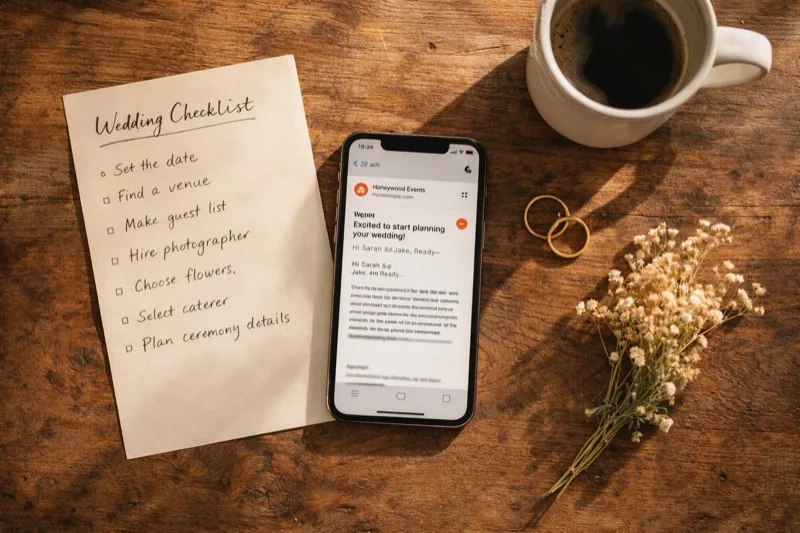
Couples love my thirty or so pre-wedding emails because each one arrives when it's actually useful, covering speeches, music, seating, the Love Story or logistics, so they feel supported instead of left in silence. After more than 2,500 weddings, I know which worries turn up when, and each email is timed to meet them.
What Happens Between Booking Your DJ and the Wedding?
You've just booked your wedding DJ. The contract is signed, the deposit is paid, and you feel good about ticking something off the list. Then what?
For most couples, what follows is months of silence. Maybe a generic confirmation email. Then nothing until four weeks before the wedding, when you get a form asking for your must-play songs and a rough timeline. That's it. That's the entire relationship between booking and show day.
In the gap, you're left to figure things out on your own. Should the speeches go before or after the meal? How do you handle song requests from guests who think they're a DJ? What on earth do you do about the seating plan? How do you make sure the non-dancers actually enjoy the evening?
You end up Googling these questions at midnight, reading advice from strangers on forums, hoping you've made the right call. Your DJ, the person who has done this hundreds of times and could answer every one of these questions in their sleep, is nowhere to be heard.
That silence always bothered me. So I fixed it.
What Do Couples Actually Worry About Before the Wedding?
Across more than two and a half thousand weddings, I've noticed the same worries come up over and over. They're not obscure problems. They're the things nearly every couple thinks about but doesn't always know who to ask.
Speeches are a big one. Someone in the wedding party is terrified of public speaking, and nobody knows how to help them. Music is another. Not just "what songs do you want?" but how the music request process actually works, how to handle the uncle who insists on a twenty-minute prog rock epic, and what happens if the first dance song doesn't land the way you imagined.
Then there's the stuff people don't realise they need to think about until it's too late. Seating plans that accidentally put feuding family members within earshot. A timeline that leaves no breathing room between the ceremony and the meal. Games and ice-breakers that could save an awkward drinks reception but that nobody thought to plan.
These are all solvable problems. Most of them are solvable months in advance, if someone points them out in time.
What Do the Thirty Emails Cover?
Over the months between your booking and your wedding, I send around thirty emails. Not marketing. Not newsletters. Not "just checking in" filler. Each one covers a specific topic at the point in your planning when it's actually useful.
Early on, you'll get practical setup information. Your login to the online planning portal, what to expect next, and a sense of how the whole process works. No overwhelm. Just enough to know you're in good hands.
About six months out, you'll get an email about speeches. Specifically, if anyone in your wedding party is nervous about speaking, I'll suggest they look into Toastmasters. It sounds like a small thing, but six months is exactly the right amount of lead time for someone to build confidence. Leave it until three weeks before and it's too late to help.
As you get closer, the emails become more specific. Music planning, so you understand how the song selection process works rather than just filling in a form. Seating tips, including a trick about speaker positioning that most couples wouldn't think about. Table naming ideas tailored to your interests (I've had couples do F1 circuits, dog breeds, and Terry Pratchett characters). An introduction to the love story narration and what you'll both need to do to prepare for it.
In the final weeks, the tone shifts. The logistics email confirms the practical details: load-in time, parking, contact numbers, the things that need to be nailed down. And then, three days before your wedding, you get one last email that has nothing to do with planning at all. It's just a note saying everything is handled, you've done brilliantly, and all that's left is to enjoy the day.
After the wedding, there's a thank-you note that references specific moments from your day. Not a template. A genuine message about what I noticed and what stood out. If your nan danced for the first time in years, I'll mention it. If the best man's speech brought the house down, I'll say so. These details matter because they prove that someone was paying attention.
Later, an anniversary email. Because why wouldn't you mark the date? One of the nicest parts of this job is checking in a year later and knowing that the couple I helped is celebrating their first anniversary. It costs me nothing and it means something to them.
Are the Emails Personalised or Just Templates?
They're personalised, because sending thirty generic emails would be worse than sending none. The whole point is that each one is relevant to you, your wedding, and what you're dealing with at that particular moment.
I've built a system that captures every conversation we have, from the first Zoom call onwards. The details you share about your family dynamics, your musical tastes, your worries, your ideas for the day. All of it feeds into the emails you receive. If you mentioned during our call that your mum is anxious about the speeches, the speech email won't be generic advice. It will address that specific concern.
Couples who are into motorsport get table naming suggestions based on Grand Prix circuits. Couples with dogs get a note about pet-friendly wedding planning. Couples who told me they're stressed about the seating plan get the seating email a week earlier, with extra detail. If one of you mentioned during our Zoom call that you're worried about a family member who tends to take over, I'll address that thoughtfully in a later email.
The involvement level is up to you, too. Some couples want detailed planning support on every aspect. Others want the reassurance of knowing someone's thinking about these things without needing to be involved in every detail. After booking, you choose how engaged you want to be, and the emails adjust accordingly.
It's not magic. It's paying attention and building a system that remembers what matters to you. Technology in the service of care, not as a replacement for it. I review every email before it goes out. Nothing reaches your inbox without a human pair of eyes on it.
What Do Couples Say About the Emails?
The thing that surprised me most when I started this approach was how often the emails come up in reviews. Not the music. Not the lights. Not the dancefloor. The emails.
Couples mention how helpful they were. How they felt supported throughout the planning process, not just on the day itself. How a specific email arrived at exactly the right moment, when they were stressing about that exact topic and didn't know where to turn.
One couple told me the seating plan email saved them an argument. Another said the speech email gave them the confidence to suggest Toastmasters to the best man, who had been losing sleep over his speech for weeks. Several have said that the pre-wedding "everything is handled" email made them cry, in a good way.
These aren't emails about me. They're emails about your wedding. That's why they land differently from a DJ who sends a form and calls it preparation.
Why Does Regular Contact Before the Wedding Matter?
The gap between booking and wedding day is where trust is built or lost. Most suppliers go quiet. You hear from the florist six weeks before. The photographer checks in a month out. The venue sends a logistics form. In between, you're on your own.
I don't think that's good enough. You're spending a year or more planning the most significant party you'll ever throw, and the people you've hired to make it brilliant shouldn't disappear for eleven months of that process.
Thirty emails isn't about quantity. It's about showing up consistently. Each one says the same thing without ever saying it directly: I'm paying attention. I've thought about this. You're not on your own.
That's not a feature. That's not a package upgrade. It's just what doing this properly looks like.
And it's the reason couples remember the emails as much as the music. Because both of them come from the same place: actually caring about how your wedding feels, from the moment you book to the moment you leave the dancefloor.